
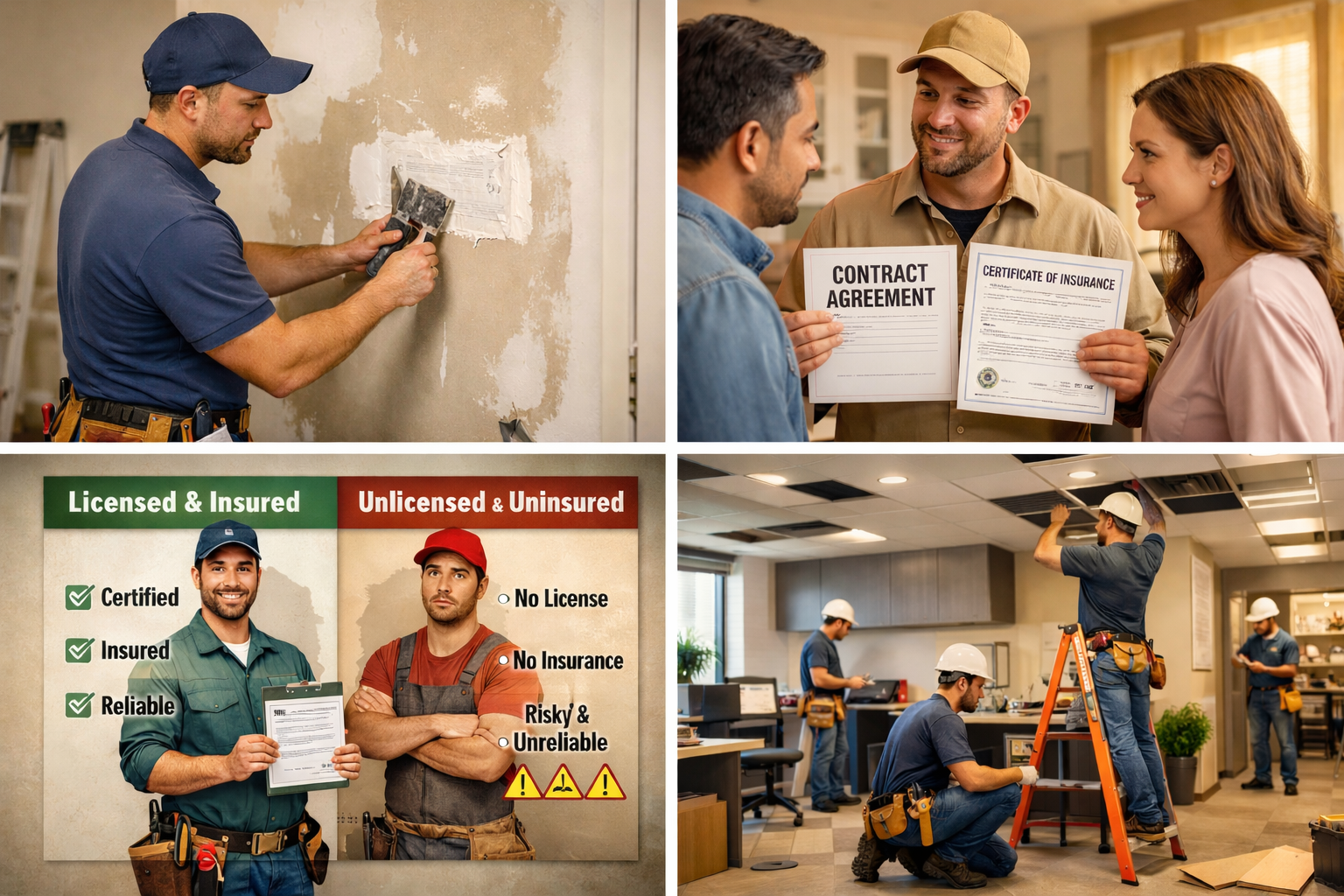
The Importance of Hiring a Licensed and Insured Handyman for Your Home or Business
Introduction: Why Choosing the Right Handyman Matters
When something breaks, leaks, or needs an upgrade, many homeowners and business owners instinctively call the nearest handyman. But not all handymen are created equal. While an unlicensed handyman might seem like a cheaper option, hiring someone who is licensed and insured isn’t just smart — it’s essential.
A licensed handyman brings not only skill but accountability, professionalism, and protection. Whether it’s electrical work, plumbing, or structural repair, choosing a qualified professional ensures the job is done safely, legally, and to a high standard.
⸻
Understanding What “Licensed and Insured” Really Means
What Is a Licensed Handyman (in Texas)?
In Texas, the term “licensed handyman” works a little differently than in many other states. Texas does not require a specific state-issued handyman license. Instead, handymen must have a valid business license and comply with any local city or county registration rules and building codes where they operate. However, when it comes to specialized trades, the rules are stricter. Anyone performing electrical, plumbing, or HVAC work must hold the appropriate state-issued trade license through the Texas Department of Licensing and Regulation (TDLR) or relevant licensing boards. That means a Texas handyman can handle general repair, maintenance, painting, carpentry, and home improvement projects, but cannot legally perform specialized work without the proper state license. By ensuring your handyman operates with an active business license, you’re confirming they are a legitimate, tax-compliant business following Texas law — a key factor in protecting yourself as a homeowner or business owner. Why Insurance Coverage Is Essential Insurance is equally important. Whether a handyman holds a trade license or just a business license, general liability insurance and workers’ compensation offer essential protection. If an accident or property damage occurs, these policies safeguard both the homeowner and the contractor from financial risk. In short, insurance provides peace of mind that the job can be completed safely and responsibly.
⸻
The Hidden Risks of Hiring Unlicensed Handyman Services
Liability and Legal Complications
If an unlicensed handyman gets injured while working on your property, you could be liable for their medical bills and lost wages. Similarly, any property damage may go uncompensated without valid insurance coverage.
Quality Control and Work Standards
Licensed or insured professionals adhere to professional standards and building codes. Unlicensed workers often cut corners, leading to unsafe or poor-quality results.
The Cost of Cutting Corners
Unlicensed services may seem cheaper initially, but the long-term costs can be substantial — from property damage repairs to potential fines for noncompliance with local building codes.
⸻
Key Benefits of Hiring Licensed and Insured Handyman Companies
Guaranteed Quality and Professionalism
A legitimate handyman business operates under legal standards, ensuring professionalism, experience, and consistent quality of service.
Protection Against Accidents and Damages
Insurance coverage shields homeowners and business owners from potential financial loss. Whether it’s a minor mishap or major issue, insured companies take responsibility for the outcome.
Compliance with Local Codes and Regulations
Licensed and insured professionals understand Texas building codes and safety standards, ensuring that all work meets local compliance requirements.
Peace of Mind for Homeowners and Businesses
Knowing your handyman is legitimate, insured, and compliant provides confidence that your property is protected and your investment is secure.
⸻
How to Verify a Handyman’s Insurance Status
Asking for Certificates and Proof of Insurance
A reputable handyman should provide a Certificate of Insurance (COI) and a valid business license upon request. Verify that coverage includes both liability and workers’ compensation.
Red Flags to Watch Out For
Be cautious if a handyman demands full payment upfront, lacks verifiable business credentials, or avoids providing written estimates or references. Standard business practice is 50% down and 50% upon completion.
⸻
Comparing Costs: Licensed vs. Unlicensed Handyman Services
Short-Term Savings vs. Long-Term Expenses
Hiring an unlicensed handyman may save you a little money initially, but when something goes wrong, you’re left paying more — sometimes double or triple the original cost.
Value and Trustworthiness Over Price
Professional handyman services may charge more, but they offer reliability, accountability, and work that lasts. In the long run, you’re paying for peace of mind.
⸻
Case Study: When Hiring the Wrong Handyman Goes Wrong
A homeowner in Austin once hired an unlicensed worker to “patch” a leaking roof. The handyman used the wrong materials, leading to interior water damage and mold growth that cost over $10,000 to remediate. Since the handyman had no insurance, the homeowner bore the entire expense.
This costly mistake could have been avoided by hiring a licensed and insured professional from the start.
⸻
Expert Tips for Choosing the Right Handyman Company
Look for Reputation and Reviews
Check Google, Yelp, and Better Business Bureau (BBB) reviews. Reliable companies often have strong reputations built on years of quality service.
Verify Experience and Specialty Areas
Ask about the handyman’s specific skills and experience. General repairs are fine without trade licenses, but specialized work should always involve a licensed trade professional.
Request Detailed Estimates and Contracts
Always get written estimates and signed contracts before work begins. This ensures transparency and clear expectations between both parties.
⸻
FAQs About Hiring a Handyman
1. Is a handyman required to have a license in Texas?
No, Texas does not issue a specific handyman license. However, a business license is required, and specialized trades (plumbing, electrical, HVAC) require state licensing.
2. What insurance should a handyman carry?
General liability insurance to protect against property damage or injuries during a project.
3. Can I verify a handyman’s license online?
Yes. You can verify trade licenses business license through the Texas Secretary of State database.
4. What happens if I hire an unlicensed handyman?
You risk poor workmanship, no insurance protection, and financial liability if something goes wrong.
5. Are licensed and insured handymen more expensive?
Typically yes, but you’re paying for safety, reliability, and peace of mind.
6. Should my handyman provide a written contract?
Absolutely. A professional handyman should always offer a written estimate and signed agreement.
⸻
Conclusion: Invest in Safety, Quality, and Professionalism
Hiring a licensed and insured handyman in Texas means working with a legitimate, protected, and professional business. Even though Texas doesn’t issue a specific handyman license, a valid business license and insurance coverage ensure your project is handled safely, responsibly, and legally. Whether you’re repairing drywall or remodeling an office, choose a handyman who values transparency, professionalism, and customer protection